


Omar Barghouti on 20 Years of BDS and the Power of Collective Action
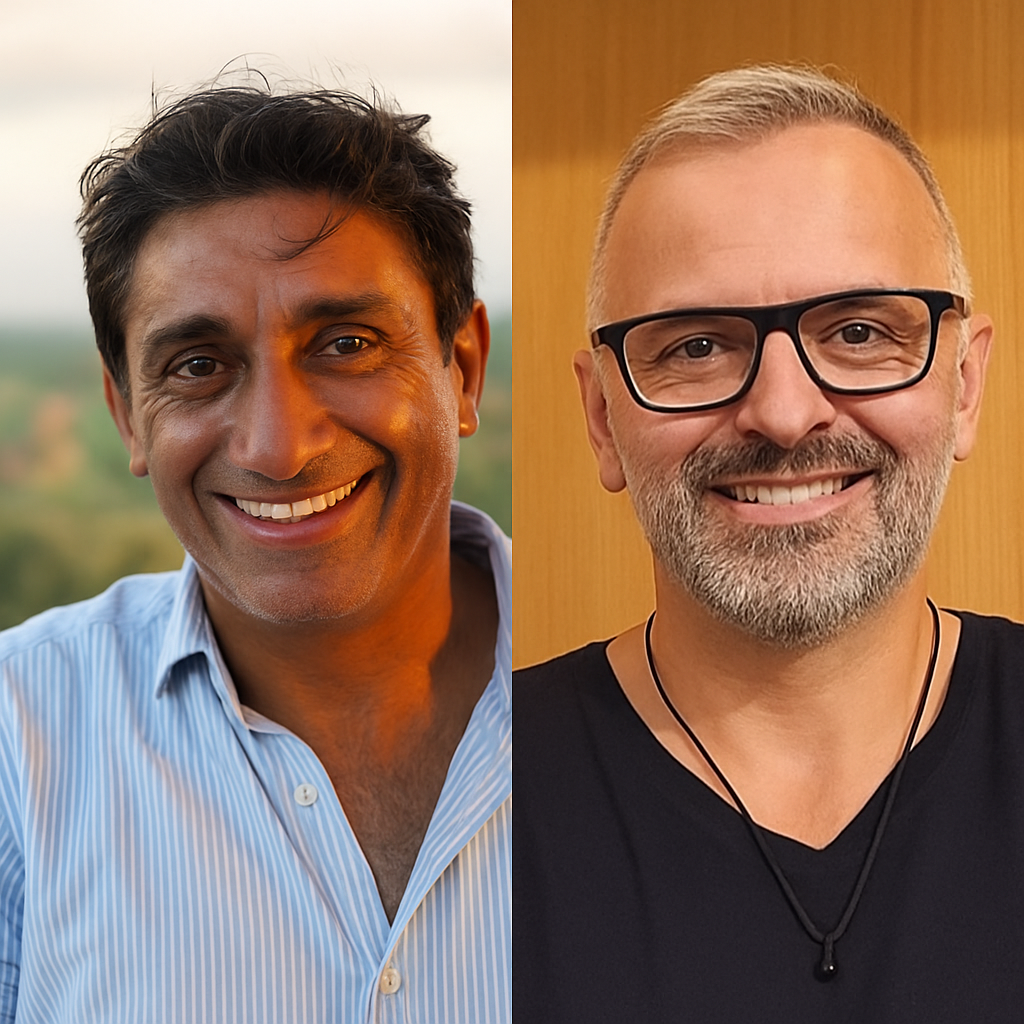
Exclusive interview with Omar Barghouti, Co-Founder of the Boycott, Divestment & Sanctions (BDS) movement and recipient of the 2017 Gandhi Peace Award.
GENOCIDE IN PALESTINE
The international legal context surrounding the situation in Palestine has shifted profoundly in recent years, with growing global recognition that Israel’s actions violate fundamental principles of international law.
In January 2024, the UN Independent International Commission of Inquiry found that Israel is plausibly committing genocide in Gaza under the Genocide Convention and ordered provisional measures that place obligations on all states to prevent further atrocities. Later that year, the International Court of Justice ruled that Israel’s continued presence in the occupied Palestinian territory, including East Jerusalem, is illegal. This decision reaffirmed that Israel is in breach of international human rights and humanitarian law and of the International Convention on the Elimination of All Forms of Racial Discrimination.
These rulings have accelerated calls from UN bodies, human rights experts, and international civil society for States to halt all forms of military, economic, academic, and political cooperation that contribute to Israel’s violations. UN experts have also confirmed that starvation in Gaza is being used as a weapon of war, describing it as another manifestation of mass atrocity crimes.
TWENTY YEARS OF NONVIOLENT RESISTANCE
Within this landscape, the Boycott, Divestment, and Sanctions movement has emerged as one of the most influential global civil society responses. Launched in 2005 by a broad coalition of Palestinian civil society actors, BDS is a nonviolent movement modeled on the anti-apartheid struggle in South Africa. It calls for ending Israel’s occupation, achieving equality for Palestinian citizens of Israel, and upholding the rights of Palestinian refugees.
The movement is firmly rooted in universal human rights, categorically opposes all forms of racism, including antisemitism, and focuses on institutional complicity rather than individuals. Its strategy emphasizes nonviolent pressure to end systems of oppression and achieve justice and equality.
Over the past two decades, BDS has significantly shaped global discourse and action. Politically, the movement has contributed to a rising number of states – in Africa, Asia, Latin America, and parts of Europe – publicly reducing ties with Israel or supporting targeted sanctions. Israel now faces unprecedented scrutiny in international forums, and several Western countries have begun reassessing their military and economic cooperation. Economically, Israel is experiencing a marked decline in investor confidence, with major corporations withdrawing from the market, ratings agencies downgrading its outlook, and global funds divesting from companies complicit in violations. This reputational and financial pressure has been described by some Israeli economists as a mounting crisis with long-term implications.
The movement’s influence extends across multiple sectors. Labor unions representing tens of millions of workers worldwide have endorsed boycotts or taken direct action by blocking weapons shipments. Cultural institutions and thousands of artists have suspended cooperation with Israeli entities, while academic associations have endorsed boycotts of complicit institutions, and universities have launched divestment campaigns. In sports, teams and national associations across regions have withdrawn from competitions involving Israel, adding moral and symbolic pressure. Student movements around the world have revived mass mobilization, contributing to divestment victories and pushing universities to adopt more ethical investment policies. Faith-based organizations, including global Christian networks, have embraced divestment principles and supported apartheid-free community initiatives. LGBTQIA+ networks and artists have also rejected pink-washing strategies and aligned themselves with calls for accountability. At a local level, hundreds of community spaces have declared themselves apartheid-free zones, embedding solidarity in grassroots practice.
INTERVIEW WITH OMAR BARGHOUTI
How has the BDS movement been so successful at confronting imperialist and colonial systems when it comes to the Palestinian struggle, and how does that provide a blueprint for other current and future struggles and causes? How have you exposed these corrupt political and economic systems?
OB: There are several factors that have helped make the BDS movement reach this level of impact in isolating Israel’s regime of settler-colonialism, apartheid, and military occupation. BDS is led by the largest Palestinian civil society coalition. This gives it the moral authority to represent the Palestinian consensus when talking to solidarity partners and allies and when campaigning to end the complicity of states, corporations, and institutions.
As an integral form of Palestinian popular resistance and the most important form of international solidarity with the Palestinian liberation struggle, BDS is a set of principles and a set of strategic tools. One of the most important factors, perhaps, in the movement’s impressive growth in impact is its ability to maintain a golden balance between ethical principles and strategic effectiveness, or what we call strategic radicalism, in short. In other words, BDS campaigns are nonviolent, anti-racist, principled, goal-oriented, and strategic, and they adhere to the movement’s operational principles of context-sensitivity, gradualness, and sustainability.
Another key factor is the movement’s success in transforming the very meaning of international solidarity, centering the ethical and legal duty to end complicity.
BDS targets complicity, not identity. It targets institutions, not individuals. It encompasses, inter alia, economic, financial, academic, cultural, and sports boycotts; military-security embargoes; divestment from -- and excluding from contracts -- corporations and banks that are complicit in Israel’s war crimes, crimes against humanity and now genocide; as well as targeted and lawful sanctions, including pressuring governments, local governments, regional bodies, etc. to fulfil their obligations under international law by ending all complicity with Israel’s regime of oppression.
The BDS theory of change revolves around building power from the grassroots up to affect policy change. International law and ethical principles, after all, are necessary but woefully insufficient conditions for achieving justice and emancipation from colonial subjugation, as Palestinians have known for decades. Only more people power, grassroots power, especially channeled towards effective and strategic boycotts, divestment, and lawful sanctions, can force the genocidal US-Israeli axis to stop the genocide, and can ultimately contribute to dismantling Israel’s underlying regime of settler-colonial apartheid.
Facing Israel’s western-enabled genocide, and exercising our moral agency, we in the BDS movement have learned to persistently channel our grief and rage into principled and strategic energy to end Israel’s genocide, dismantle its underlying regime of settler-colonialism and apartheid, and hold the perpetrators and their accomplices to account. Palestinians have no illusions, though, that justice will shine on us from the ICJ or the UN. We have international law and the ethical high ground on our side, as an Indigenous people resisting a depraved, genocidal system of oppression to achieve our rights. Ethics and the law are necessary in any liberation struggle, but they are never sufficient. To resist and dismantle a system of oppression, the oppressed invariably need power as well: people power, effective solidarity power, grassroots power, intersectional coalition power, media power, cultural power, among other forms.
The changing global political, social, and economic landscape, which includes shrinking civic spaces and the regression of certain freedoms to protect Israel by many governments, has introduced many challenges to the BDS movement. How are you tackling these challenges?
OB: As recently revealed in an investigative report in The Nation, Israel and its lobby groups in the US alone have allocated some 900 million dollars for fighting BDS over a period of a few years. In fact, Israel, a nuclear power that is armed to the hilt by the US, Germany, and other colonial powers, has since 2014 designated the nonviolent BDS movement as a “strategic threat” and, later, as an “existential threat” to its regime of oppression. Though it has mobilized massive financial, intelligence, lawfare, propaganda and diplomatic resources in its war on BDS, Israel has miserably failed to even slow down our movement, thanks to the resilience, creativity, and strategic radicalism of millions of BDS advocates, supporters, and organizers worldwide.
It is not easy to fight a movement that enjoys the consensus of the oppressed community, advocates nonviolent resistance based on universal principles of international law and human rights, rejects all forms of racism in a morally consistent manner, and, crucially, is very capable in devising principled and effective strategies to build people power and challenge all forms of complicity in Israel’s regime of colonial oppression.
Over the last two decades, the BDS movement has built a massive network worldwide, supported by trade unions, farmers’ coalitions, as well as racial, social, gender, and climate justice movements, together representing tens of millions worldwide.
How do you view the global mobilization of people towards the Palestinian struggle, especially in Western countries? Do you think more can be done, and how?
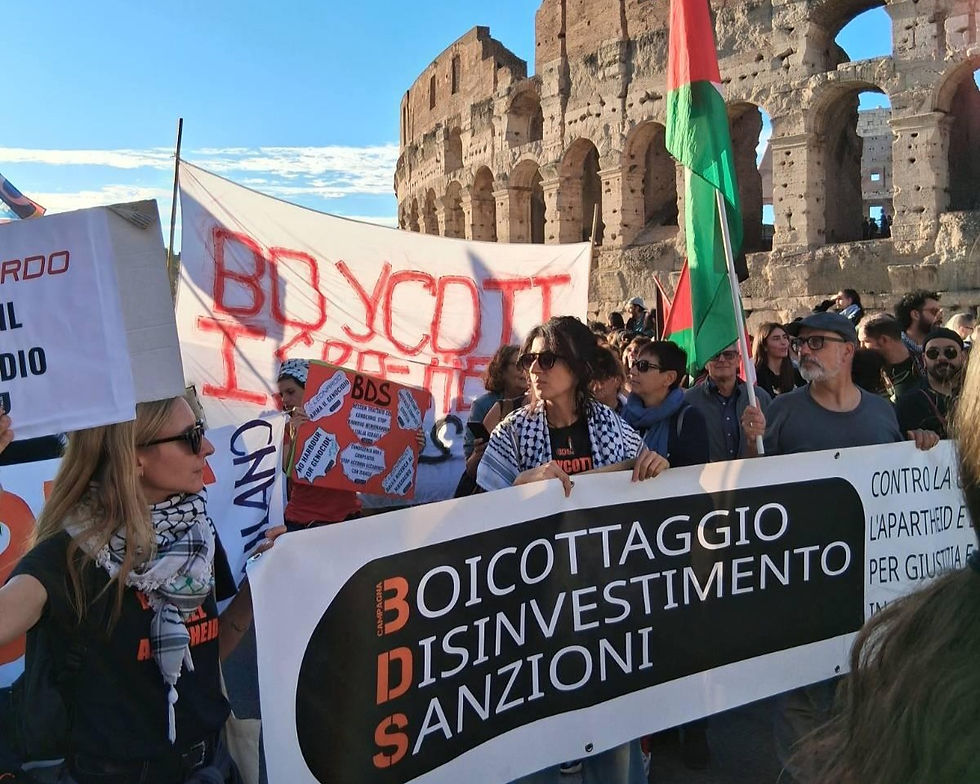
OB: The national strike of September 22nd in Italy that was organized by dockworkers’ trade unions and their allies against Israel’s genocide and Italy’s complicity in it was a bright and most inspiring example of what meaningful solidarity looks like. This unprecedented national strike in solidarity with the Palestinian liberation struggle is serving as an example for solidarity mobilizations in other countries, as the national strike waged in the Spanish state most recently by trade unions there shows.
All this and the massive BDS wins globally are great, but they are still not enough to end all complicity in Israel’s genocide and underlying regime of settler-colonial apartheid. We need to build more people power, larger intersectional coalitions, adopt more effective tactics, etc. to actually make governments adopt a military embargo, complete embargo, including dual-use items and the transit of military supplies to Israel; energy embargoes; trade and financial sanctions; academic, cultural and sports sanctions; throwing Israel out of the UN, FIFA, the Olympics, Eurovision, etc. Israel must be held accountable for its genocide and ongoing apartheid and military occupation, just as apartheid South Africa once was.
How can United Edge and its diverse range of activists support a movement like the BDS?
OB: Organizers in any given space would know best how to stand in principled and effective solidarity. Palestinians are not begging the world for charity; we are calling for meaningful solidarity. But before both, we are demanding an end to complicity, to do no harm. Ending complicity in grave human rights violations is a matter of duty, not discretion.
As the struggle that abolished apartheid in South Africa has shown, ending state, corporate, and institutional complicity in Israel’s system of oppression, especially through the nonviolent tactics of BDS, is the most effective form of solidarity. In this darkest of moments, BDS helps to decolonize our minds from the powerlessness and hopelessness with which Israel and its colonial partners have relentlessly attempted to colonize them.
How best to end the complicity of any given network or institution is best answered by the principled organizers in that space.
JUSTICE OVER CHARITY THROUGH COLLECTIVE ACTION
After twenty years of BDS, Barghouti’s reflections cut to the heart of what movements for justice across the world have been insisting for decades: systems of oppression do not reform themselves – they are dismantled by collective action grounded in principle, courage, and solidarity. The BDS movement’s twenty-year arc embodies what many in the humanitarian and development worlds are only now beginning to articulate — that only deep-rooted system change, not more aid, will turn the tide of oppression, destruction, and suffering. The story of BDS is ultimately the story of people reclaiming agency, confronting systems rather than symptoms, and showing that when communities refuse to participate in oppression, even the most entrenched structures begin to move. But it is also a call to action to continue growing networks of solidarity, to keep working always through a lens of Justice, and to never forget what change becomes possible wherever ordinary people choose to stand together in collective action.
Omar Barghouti is a Palestinian human rights defender, co-founder of the Boycott, Divestment and Sanctions (BDS) movement, and a leading global voice for freedom, justice, and equality for the Palestinian people. He is internationally recognized for his advocacy grounded in nonviolent resistance and international law, and his work has been acknowledged through multiple awards, including the Gandhi Peace Award. Barghouti writes and speaks widely on human rights, decolonization, and ethical responsibility, contributing to academic and public debates on justice in Palestine and beyond.
Anwaar Ahmed, a former investment banker with Morgan Stanley, applies his life experience and competencies towards social development and humanitarian projects aimed at justice, freedom and equality around the world through a path of Karma Yoga. He currently resides in Rome where he is an active member of the BDS movement and of Assopace Palestina as well as a Fellow in United Edge’s Justice Collective.
Elias Ayoub is a fellow of United Edge’s Justice Collective and a seasoned development practitioner and Executive. He is a passionate advocate for children and youth rights, a foresight practitioner, and an expert on scale and innovation. Currently, Elias is working closely with local communities, both Lebanese and Palestinian, through justice and rights-based approaches to amplify local voices and promote activism both at a micro and macro level.


I was curious about Dreamisland sign in because it seems to focus heavily on variety rather than a single style of entertainment. The published information points to more than 6,000 titles, with new content arriving regularly. I noticed several different game mechanics, plus blackjack, roulette, baccarat, video poker, keno and scratch cards. The mobile app also caught my attention because it aims to provide a similar experience to desktop access. There are claims about loyalty points that can be converted into cash value and various recurring offers, although I would always read the current terms before assuming those conditions apply universally. From my perspective, the strongest feature is the breadth of choice. The important thing is to approach it with…