


Water Injustice in Kenya as Community Members Stare at Dry Riverbeds

Imagine waking up to the sound of rain after a prolonged period of drought, arousing your family members, and rushing to the river to fetch water for your household needs and livestock… only to meet the dry riverbeds staring back at you! You look at the dry bed more than once and have to decide. Do you go back home to your homestead that has not seen water for a very long time, with your emaciated livestock, and the threat of wildlife coming closer and closer day by day as they search for water? Or do you stay and dig the dry riverbed for any water, even if it will take you hours to fill the buckets you came with?!
To an outsider, this could sound like a scene from a movie, but that is the reality several pastoralists face in Kenya. The community members along the Noolturesh River in Kajiado County face this reality year-in and year-out. They face the double tragedy of neither having a drop when there is a drought nor when it rains because their neighbours in the middle and upper catchment of the river have already dug canals and diverted the water to their farms without care for the community members living downstream.
River Noolturesh flows from the upper catchment around Mt Kilimanjaro, where the water is clean, into the middle catchment where most of the farming is happening, and finally into the lower catchment in Kajiado County where pastoralists and wildlife live together side-by-side.

A tour down the river shows the middle catchment, where the farmers are, with brazen disregard and careless impunity, as they expand their tomato farms while the government looks the other way. What is even more worrying is the insolence with which they pour chemicals on their farms that end up swept back into the river during the rainy season. They do this knowing very well that the community members, livestock, and wildlife downstream that depend on the water, too, will receive the poisoned run-off!
Most of the farmers have dug deep canals that are used by them to transfer water to their farms some kilometres away, and in the process, nothing is left to flow downstream. While some of them at times open the canals, by this time the water is too little to flow into the lower catchments where people, livestock and wildlife are depressed waiting for the resource.
According to Water.org, 34% of Kenya’s 56 million population rely on unimproved water sources like ponds, springs, shallow wells and rivers for their daily water needs. And as reliable water sources and rivers shrink into dry, dusty beds, these populations face the visible consequences of dying livestock, failed crops, and deepening poverty. And women face the biggest burden as they must walk longer to get the water while also balancing other household duties.
The challenge faced by the communities along the Noolturesh River is replicated in most parts of the country and is largely caused by the unchecked over-abstraction of water upstream. Rivers that once sustained entire communities are increasingly being diverted or depleted to serve agricultural irrigation projects, urban developments, and commercial farms – often with little consideration for the people living downstream. This practice effectively denies communities, livestock, and wildlife access to a shared natural resource, thus worsening the already harsh realities of life in Kenya’s arid and semi-arid regions.
Along River Noolturesh, girls as young as 10 spend time digging into the sand of the drying riverbed under the scorching sun, desperately trying to fill their 20-litre jerrycan. Sometimes they take almost a whole day trying to pick the best place with the most water. Meanwhile, upstream, channels have been dug to divert water into vegetable and tomato farms! Instead of offering solutions, government officials are passing the buck to others they think are more culpable.

While climate change has certainly contributed to more erratic rainfall and water scarcity, much of the river depletion seen in areas like Kajiado is human-driven. Unregulated and illegal water abstraction, as well as inefficient irrigation methods upstream by both small-scale and large-scale farms, have all contributed to the vanishing of natural water sources. This over-abstraction is not only unsustainable – it is unjust. It transfers the costs of environmental degradation to those least responsible for it: rural women and children, who rely directly on natural water sources for survival. It transfers a heavy burden to the vulnerable communities living in the lower catchment. Wildlife and livestock are not spared either, even as the duty bearers who are supposed to provide solutions dither and point fingers instead of acting.

Solving this crisis requires a multi-stakeholder and multifaceted approach. The Justice Based Approach (JBA) is the best way to address this through JBA’s five pillars:
Living Democracy: Empowering the communities and other stakeholders to engage in addressing this issue through advocacy efforts and ensuring that the community members most affected are most involved in decision-making
Brave Accountability: Speaking truth to power to end the impunity that is so rampant that is resulting in one group effectively privatising a public good
Everyday Activism: Movement-building where different groups and individuals come together to set their agenda, as this is an issue that can’t be solved by one individual and would require sustained engagement with duty bearers and other actors
Alternative Models: Mobilizing stakeholders to come up with alternatives, whether it's investing in water harvesting when it rains or other emerging technologies.
Radical Systems: Influencing policy to come up with workable solutions, including water allocation plans, efficient irrigation, and sustainable water infrastructure that must be adhered to by all the actors
While in the Constitution of Kenya, Article 43, every person has the right to clean and safe water in adequate quantities, this promise may only remain a dream for a majority of Kenyans – and more so the community in the lower catchment of River Noolturesh in Kajiado County – unless and until the water injustices they are facing are resolved. This will require that any solution has the most affected community members at the centre of any proposed intervention, for as we say in JBA, “most affected, most involved.”

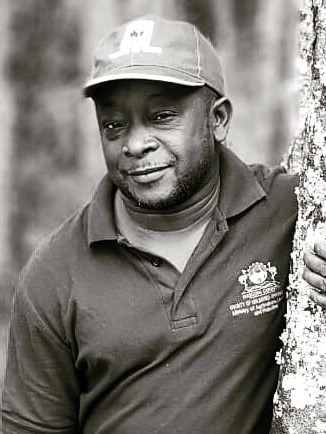
Nickson Orwa is a Fellow of United Edge’s Justice Collective and Environmental, Social Safeguards and Inclusive Conservation specialist based in Kenya. He is a committed advocate of the Justice Based Approach to social change.


I prefer information that explains how something works instead of making grand promises, which is why NYX game catalogue caught my attention. Its editorial content covers provider ratings, licensing and the small details in terms that people might otherwise overlook. I’d start with a review to understand the basics, then verify the legal details through the relevant official register. I’d also check when the review was updated, because current conditions can differ from older descriptions. Casquad states that some links are commercial, so it’s sensible to distinguish editorial information from potential commercial interests. I wouldn’t treat any single website as the ultimate authority, but it can be a useful first step in a wider search.
Good piece Nick 👏